

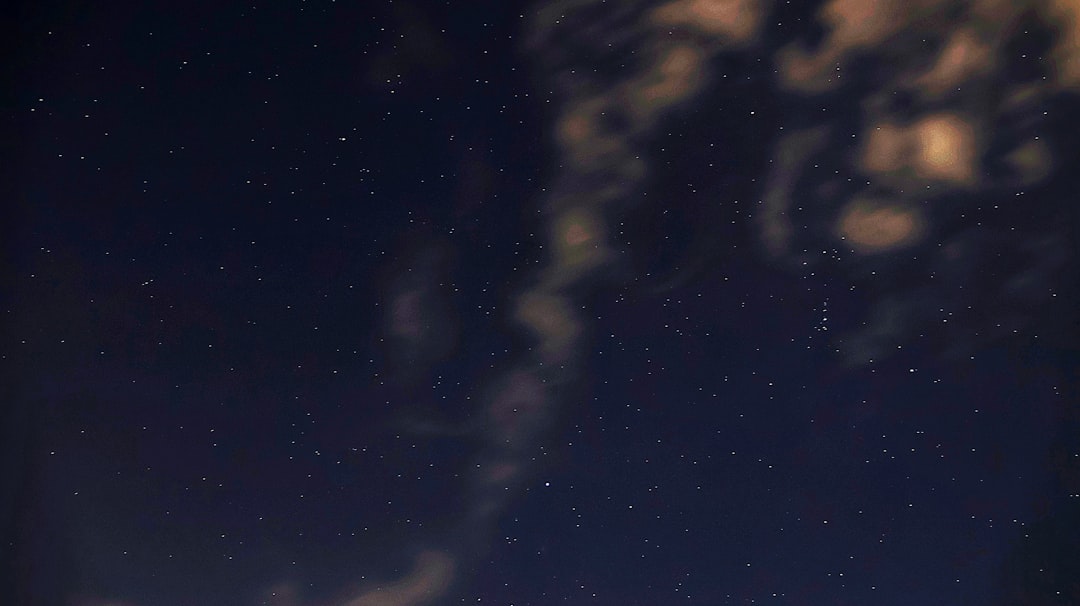
Understanding the depths of our universe has always fascinated humanity, and at the center of this curiosity lies the center of our own Milky Way galaxy. Recently, a radical idea has emerged among astrophysicists: the potential existence of “dark main sequence” stars at our galactic core. This concept, if proven, could revolutionize the field of astronomy and our comprehension of the universe’s most mysterious phenomena.
Human beings have long been enchanted by the enigmatic dance of celestial bodies. The vastness of space provides countless wonders and mysteries begging for discovery. The heart of our Milky Way has been a focal point for many astronomers, carrying the potential to answer or deepen many of the universe’s enigmas. The possibility of having “dark main sequence” stars in this cosmic center presents a challenging piece to our existing understanding of stellar and galactic evolution.
Usually associated with visible light, the traditional stars emit light detectable by telescopes. However, these “dark main sequence” stars postulated in recent times are thought to avoid detection due to the weak electromagnetic radiation they emit. An objectively daunting idea, the existence of such stars could imply a different kind of stellar lifecycle fueled potentially by dark matter interactions or other unknown cosmic behaviors.
The potential implications for our understanding of galaxies — and our own galaxy’s behavior — are enormous. Until now, stars have been categorized based upon their nuclear fusion processes and the light they emit, processes well-documented in the Hertzsprung-Russell diagram. A recognized standard in astrophysics, this diagram classifies stars primarily based on their brightness and temperature. Introducing “dark main sequence” stars into this framework could prompt significant revisions, challenging the boundaries of known physics and cosmology.
The hypothesis draws its roots from attempts to balance gravitational interactions that couldn’t be explained by observed mass and energy. Dark matter, a pivotal component yet invisible to conventional observation techniques, is believed to account for approximately 27% of the universe’s mass-energy content. The interaction of baryonic matter (normal matter) with dark matter could fuel these undetectable stars differently, giving rise to a class of stars previously uncharted.
Astrophysicists suggest that the galactic center, crowded with massive stars and black holes, offers a unique environment where conditions might favor the formation or sustainability of such stars. The intense gravitational dynamics and dense matter distribution present in the core could potentially uncover insights about these speculative stars.
However, evidence gathering remains an uphill battle. While technology continues to advance, instruments capable of detecting weak radiation signatures at stellar distances are still in development. Current research methods, relying heavily on indirect observations or simulations, highlight the challenges and allure of proving such a bold hypothesis.
A concrete discovery would not only redefine our understanding of stars but possibly the very fabric of galaxy formation and evolution. It would open up a new domain of stellar studies, prompting novel questions about how our universe operates at its most fundamental level.
This idea of “dark main sequence” stars may still be in its infancy, but as technology and observation techniques evolve, we might soon step closer to answering whether such stars dwell in the dense, mysterious heart of our Milky Way. For now, the cosmos teases us with what is possible — continually pushing the boundaries of human curiosity and our grasp of the universe’s enigmas.
Insight Report
dark main sequence stars











Leave a Reply