

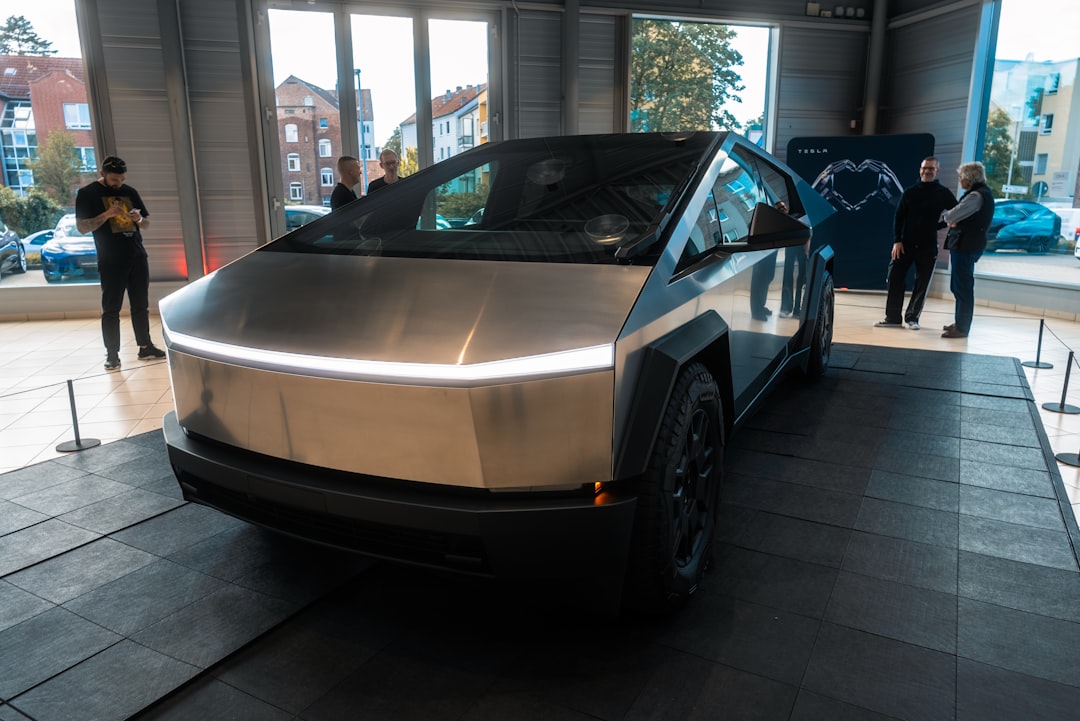
**Tesla’s bold move to revolutionize urban transportation has taken another gigantic leap forward as the company sends an entirely autonomous Model Y directly from the factory to a customer.** This maneuver not only showcases Tesla’s innovative prowess in driverless car technology but also highlights the company’s ambition to dominate the robotaxi market in the near future. This strategic demo encapsulates Tesla’s vision to transform public and private transportation through cutting-edge technology, promising an era where people may no longer need to own cars or rely on human drivers.
Over the past decade, Tesla has been at the forefront of the electric vehicle revolution, consistently pushing the boundaries of what’s possible in automotive technology. Their Full Self-Driving (FSD) suite, although still in beta, is a testament to how quickly they’re realizing the dream of a fully autonomous vehicle. The recent demonstration of a driverless Model Y being delivered directly to a customer is a clear indication that Tesla’s confidence in its autonomous technology is growing. This advancement not only throws light on the technological capabilities of Tesla but also divulges a sneak peek into the robust framework that could support Tesla’s forthcoming robotaxi service.
Imagine a world where cities are serviced by fleets of Tesla robotaxis, each autonomously piloted to provide seamless transportation around bustling urban areas. The deployment of Tesla vehicles operating autonomously enact a dramatic reduction in the need for individual car ownership while significantly cutting down on traffic congestion and pollution. The success of Tesla’s latest demonstration offers a glimpse into this potential future, highlighting how transportation technology could evolve in the coming years.
But what makes Tesla’s autonomous technology uniquely positioned to lead this change? Primarily, Tesla’s approach to self-learning and continuously improving through real-world data sets it apart from others. Unlike many competitors who rely on pre-mapped data, Tesla’s neural network, powered by artificial intelligence, processes real-time data gathered from its vehicles worldwide. This allows for dynamic adaptation and improvement, culminating in what Elon Musk refers to as the ‘supervised learning’ advantage, ultimately pushing the boundaries of what’s achievable towards complete autonomy.
Moreover, the strategic implications of such a technology cannot be overstated. Energy efficiencies aside, the cost reduction in logistics and potential revenue streams from a shared transportation-as-a-service model can revolutionize urban economies. Beyond Tesla, this technological advancement paints a broader picture of future possibilities, enticing investors, governments, and communities to consider the economic and societal benefits.
While challenges undoubtedly remain—such as regulatory approval, public trust, and infrastructure overhauls—Tesla’s demonstration exhibits a visionary chapter in automotive history, urging industry watchers to contemplate a future of seamless, autonomous mobility. It’s a unique time in transportation evolution: as cities become smarter, deeper tech integrations such as Tesla’s driverless technologies could re-architect how cities function and how people commute.
In conclusion, Tesla’s demonstration of its driverless Model Y isn’t merely a technical marvel; it’s an ambitious signal of their intent to lead the upcoming era of autonomous transportation. Through relentless innovation and the intersection of AI and mobility, Tesla continues to drive the narrative of future-ready transportation solutions.
Tech Column
Tesla










Leave a Reply